Common Creator Brief Mistakes That Kill Campaign Performance
Vague briefs with weak foundations waste creator time and tank campaign results across revisions.

An email, three bullet points, a product link, and a rough deadline: that's the brief, and it functions more like a dare than a set of instructions. No brand voice notes, no stated objective, nothing telling the creator what problem this content is supposed to solve. So the creator reads it, shrugs, and defaults to whatever format already works for their feed. That might land fine, or it might land nowhere, and nobody finds out which until the post is live, at which point the brand's only real move is watching the number tick up or stay flat.
The vague brief is the failure, and it sits upstream of everything that goes wrong after it. Discovery returns creators who look right on paper. Follower count checks out, niche is adjacent, nothing objectionable in the last twenty posts. Then they turn out wrong for the campaign, and nobody learns that until after outreach, after the call, after the contract's half-drafted. Revisions start. Round one comes back off-message, round two fixes the message but the tone's wrong, round three is fine except the deadline's gone. Somewhere in there the creator gets frustrated, because guessing at a moving target isn't a job anyone signed up for, and even after three rounds the content often still reads generic. Patchwork corrections don't fix a document that had no foundation to begin with.
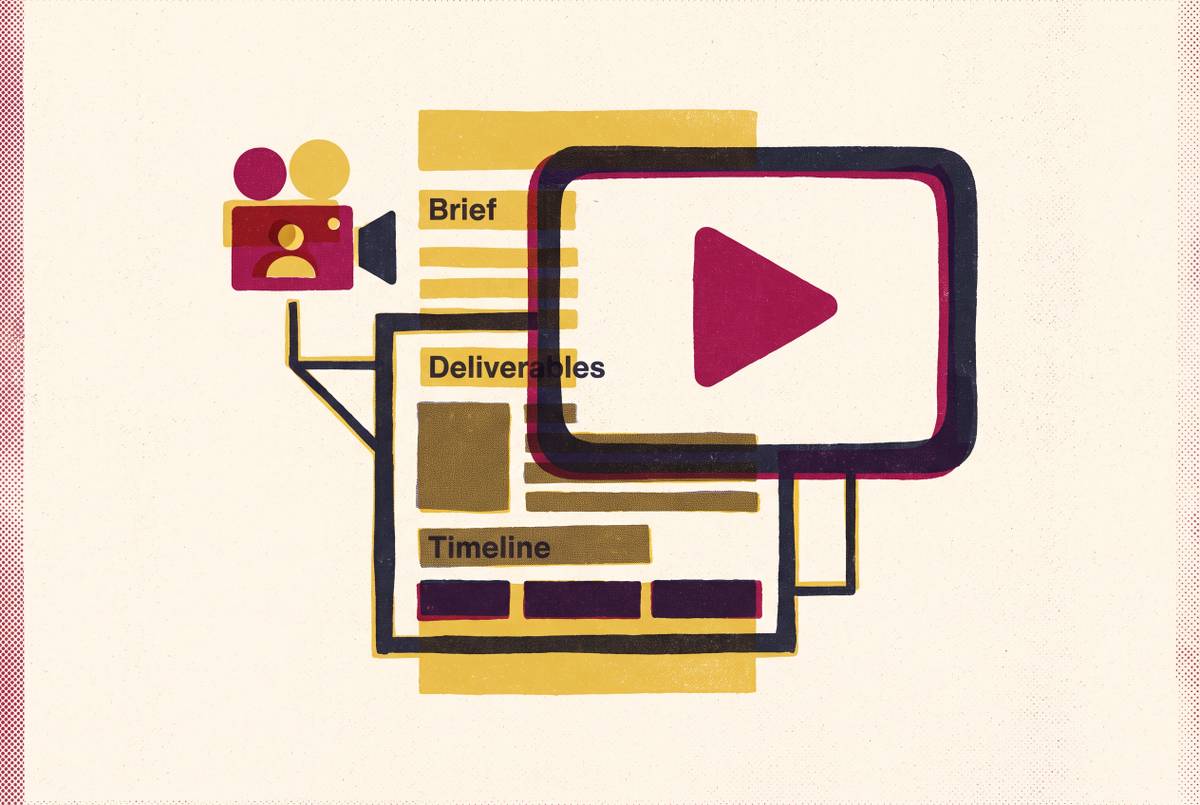
A working brief needs six components: campaign goals, key messages, messages to avoid (the one almost every brief skips), deliverables and timelines, compensation, and an approval process. FTC disclosure requirements make seven, though nobody counts that section until it's the reason for a fine, which gets its own treatment further down. A template, enforced at the start of every campaign, closes most of this gap. There's no carve-out for the "quick one" a manager insists won't need it; it always needs it.
A brief filters before it instructs. Specificity narrows the creator shortlist on its own, because wrong-fit creators self-select out before anyone wastes a call on them. Vagueness generates noise at every stage instead, from discovery through final delivery, and that noise gets mislabeled as "the influencer market being unpredictable." The real driver is an unfinished document doing exactly what unfinished documents do.
Treating campaign objectives as synonyms for brand goals
"Drive brand awareness across Gen Z" shows up in briefs constantly, and it functions more as a wish than an objective. No fifteen-second video moves an awareness metric for an entire generational cohort; that takes a portfolio of activity, timed and repeated across months. Mistaking the wish for the objective is where the brief breaks, before the creator's even been contacted. Brand goals belong to quarters and portfolios, not to single posts, and writing them into a brief as if they're the same thing sets the creator up to fail at a task nobody could have completed.
What a single post can actually do is narrower, and the narrowness is the point people keep skipping past. It can push one specific person toward one specific action: click a link, try a product, remember one fact about a brand longer than the scroll takes. That's the unit of work a creator controls, so that's the level the objective has to be written at. Pitch it any higher and the fifteen-second clip is being asked to do a whole media plan's job, which it can't, no matter how good the creator is.
Marketing jargon doesn't help either. "Activate upper-funnel audiences" reads clean to a brand manager fluent in funnel-speak and means close to nothing to the creator who has to turn it into a video by Thursday. Plain language does more work: "teach people how to use our hair dryer," or "boost sales among people who already know the brand." That gives the creator something to build around instead of a phrase they'd need a marketing degree to decode.
Resist cramming five messages into one piece of content. The instinct is common, and it fights the content's own goals directly. One takeaway, stated plainly, beats five competing for twelve seconds of attention that was never going to stretch that far. Write the objective at the level of what one viewer should think, feel, or do after watching, then work backward into format and hook, with tone, structure, and length all following from that single decision, in that order.
Over-scripting creators and removing the authenticity audiences actually respond to
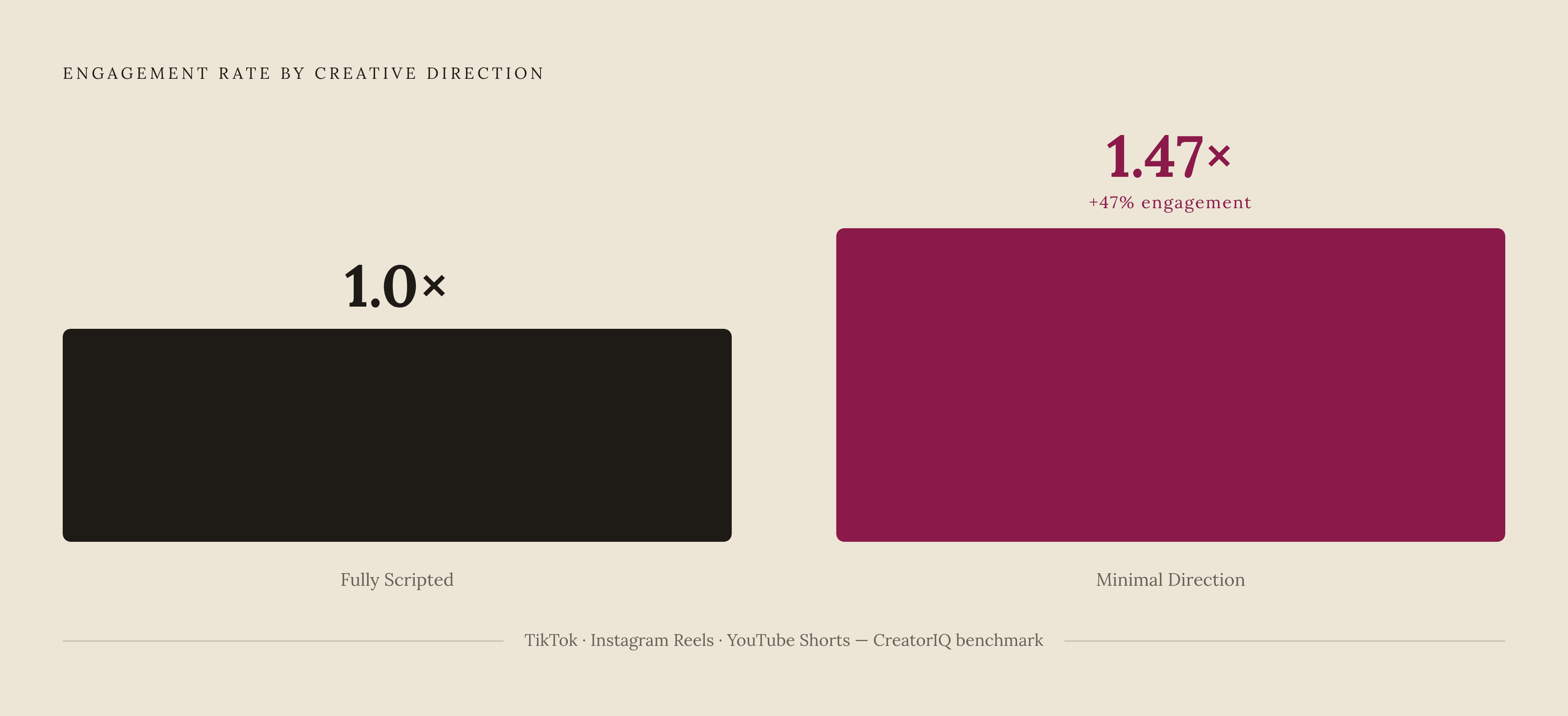
Writing a creator's script line by line feels like control, but the numbers argue otherwise. A CreatorIQ benchmark report found campaigns with minimal creative direction outperformed fully scripted briefs by an average of 47% on engagement rate across TikTok, Instagram Reels, and YouTube Shorts. That's not a rounding error: the tighter a brand holds the leash, the worse the content tends to perform, and the brands gripping hardest are usually the ones with the most to lose.
Why would an audience even notice a script? Authenticity research consistently identifies originality as a core component of creator trust. Brand scripting hits originality first and hardest. Once originality erodes, trust erodes with it, because audiences aren't naive. They can tell when a creator is reading someone else's sentence back to them.
A 2024 Influencer Marketing Hub survey found 68% of consumers say they're more likely to trust an influencer who shows genuine passion for a product, and passion only reads as real when a creator has room to phrase it in their own words. Creators feel the mismatch from the other side, too. Sprout Social's 2025 Influencer Marketing Report found 65% of influencers would rather join strategy conversations early than follow a rigid brief handed down after the fact. Bring them in before the brief is final, and most of the urge to over-specify later disappears on its own, because the creator's already told the brand what will and won't work for their audience. The brand just has to be listening at the right stage, instead of after the fact.
Draw one line, clearly, and don't blur it: non-negotiables versus creator's territory. Non-negotiables are brand safety rules, the one claim that must appear, disclosure language, and any visuals contractually required on screen. Everything else, the hook, the format, the pacing, the actual storytelling, belongs to the creator. The principle is straightforward: personalize the creative brief for each paid partner, and make sure the direction matches the style the creator already built an audience around. Hand a beauty creator a script written in a finance influencer's cadence, and the mismatch shows immediately. Audiences clock it faster than brands do.
Writing KPIs into the brief loosely — or not at all
Likes, follower counts, and impressions with no context stapled to them carry little weight as business outcomes. These are vanity metrics: surface activity, and almost nothing said about whether the campaign moved anything a finance team would recognize as revenue. Somebody on the marketing team already knows this, most of the time. The brief still gets sent without a real KPI anyway. Knowing better and briefing better turn out to be two different disciplines.
The metrics that belong in a brief look different: conversion rate, cost per acquisition, return on ad spend, customer lifetime value. These tie to something a CFO nods at. The 2025 Sprout Social Index found 65% of marketing leaders say demonstrating how social campaigns connect to business goals is crucial for securing future social investment, and that demonstration has to start at the brief, before a single deliverable goes live, rather than three weeks later in a slide deck built to justify spend that already happened.
Influencer marketing ROI benchmarks currently sit somewhere between 5:1 and 20:1 depending on industry and campaign type. That's a wide enough range that a brief with no defined KPI leaves no way to know which end to aim for, let alone whether the campaign actually got there. KPIs aren't only an internal accounting question, either. When a creator's bonus or next contract hinges on a number, ambiguity in that number becomes friction for both sides, not just an inconvenience for the brand's reporting team. The fix is one primary KPI, stated plainly, with a success threshold defined before the creator starts filming, rather than calculated afterward to match whatever happened to occur.
Briefing for content without specifying the platform it lives on
Research has found content built for a specific platform generates 40% higher engagement than generic content repurposed across channels. The gap exists because platforms don't reward the same behavior twice. TikTok optimizes for watch time and retention; LinkedIn's algorithm surfaces professional discussion and industry commentary. A brief that never names the platform is quietly asking the creator to guess which of two very different games they're supposed to be playing, and creators who guess wrong shouldn't be the ones eating that cost. Often, they are, and the risk of a missing platform line gets absorbed by the person with the least power to fix it.
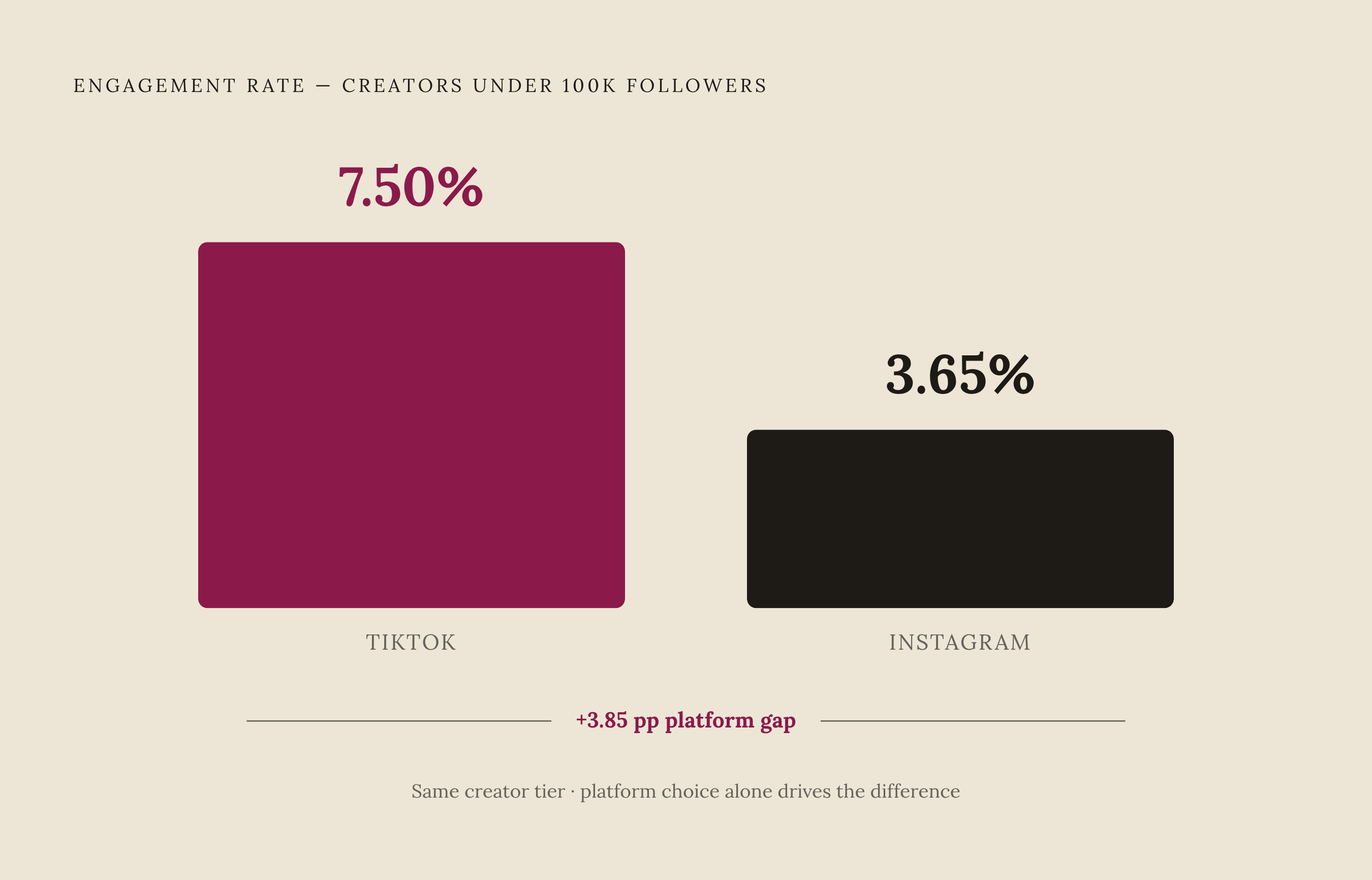
The stakes show up directly in the engagement numbers. On TikTok, creators under 100,000 followers average roughly 7.50% engagement; on Instagram, a comparable follower tier averages closer to 3.65%. Same creator, similar content strategy, a materially different outcome depending only on where it landed. That's not a variance any brief should leave to chance.
Platform-specific briefs spell out concrete things: hook requirements for the first two to three seconds of short-form video, pacing and length suited to that format, the metrics that actually define success there, and where the line sits between fixed and flexible. Name the platform alongside messaging and KPIs, from the start, in the same document. Bolting it on after the content's already shot fixes nothing; by then the format decisions have already been made, and made wrong.
Leaving FTC disclosure requirements out of the brief and letting legal liability accumulate
FTC civil penalties run $51,744 to $53,088 per violation as of 2025, under the agency's inflation-adjusted figures. Per violation, not per campaign, not per creator. Per individual post that fails to disclose properly. Run a campaign with a dozen creators and a few non-compliant posts apiece, and the math stacks into seven figures before anyone on the marketing team has opened the analytics dashboard to see how the campaign otherwise performed.
This isn't some rare edge case that only sloppy brands hit. Non-compliance is widespread across the industry broadly, an industry-wide habit of treating disclosure as an afterthought, the fine print nobody drafts until the fine arrives.
Brands don't get to point at the creator afterward and walk away clean, either. The FTC's Endorsement Guides FAQ, published in 2023, states plainly that brands carry responsibility for instructing creators on disclosure requirements, monitoring what gets posted, and taking corrective action when violations happen. Handing off a brief and never checking the final posts reads less like a defense and more like an admission that nobody was watching.
The disclosure section needs actual specifics, then, not a vague line about "following FTC guidelines." Explicit language is required: #ad or #sponsored, with placement requirements spelled out, platform-specific guidance since disclosure placement differs across TikTok, Instagram, and YouTube in ways that trip up creators who assume one rule covers all three, and a written acknowledgment that liability sits with the brand as well as the creator. This section deserves treatment as a liability control built into the workflow, the same way legal review gets built in elsewhere, rather than boilerplate pasted in at the end because someone remembered at the last minute.
What a brief that avoids all of these mistakes actually looks like
A corrected brief isn't longer. It's specific in the handful of places where specificity actually pays off, and it can stay loose everywhere else without costing anything. The objective is written at the level of one viewer's action or belief, a target no single post could ever move if pitched at the scale of a brand-wide metric. There's one primary KPI, defined in concrete terms, with a stated success threshold. Brand guardrails sit clearly apart from creator territory, so nobody's negotiating that boundary mid-shoot. The platform is named, with hook, length, and pacing spelled out for that exact format, and the disclosure language is written in full, rather than gestured at with a phrase like "per FTC rules."
Speed follows from this, which sounds backward until the delays get traced to their actual source. Teams that build a standard brief template and enforce it without exception see fewer revision cycles and faster time-to-publish, because most delays trace back to ambiguity a better first draft would have closed off. Quality and speed move together here, and that only happens once the process gets structured before the first creator opens the document, rather than patched in after round two of revisions already went sideways.
Brief quality functions as a strategic asset, which makes it strange how often it gets treated like an afterthought, rushed out on a Friday afternoon by whoever drew the short straw. Teams that own their brief process own their campaign performance in a direct, traceable way. Teams that outsource the brief to the creator or the agency get whatever the creator or agency assumed was wanted, a coin flip dressed up as strategy. The brief is the one document a marketing team controls completely before production starts, and fixing it costs nothing beyond attention, paid once, up front, compounding across every activation that follows.